There is nothing more satisfying than the feedback from pressing the shutter and feeling the mirror clap to expose the film or sensor to light. An instance of light has been captured and an image has been made.
Category: photography
Learning to buy well secondhand
Over the past six or seven years I have slowly acquired a camera system with which I am satisfied with. It began with the D610, a Nikon camera body that stood at the level to entry professional photography gear.
Finding the lenses I used to be insufficient I then purchased an old 70-200mm f/2.8G. It was a generation before the D610 but it worked perfectly with this body. But then I found the D610 could not keep up with this lens. The lens was clearly a true professional tool. It could handle faster shutter speeds and auto focus. My D610 was simply not truly professional in that sense.
Later, I acquired a few more professional lenses before I realized how lacking the body really was. By the time I had accumulated a set of serious professional lenses I knew I needed to upgrade my body.
It was then I found a secondhand D500. This camera was able to handle these lenses. But it was a crop sensor so I was covering the wide end with my D610. No longer was the D610 a joy to shoot with after you have seen what a true professional body can do.
So I took the plunge and bought the D850.
This body came out one year after the D500. It is still a current production model. While Nikon, like everyone else, is moving to mirrorless cameras this is thought be the last DSLR Nikon will make for now. Nikon did the same thing when it transitioned to digital SLRs form film cameras. It created the F5 as a farewell. This time it was the D850 and the already discontinued D500. In other words, I now own the pinnacle Nikon gear of the DSLR era.
And what would have cost me double if not triple or more I got for what would be considered a bargain.
I now have a professional kit which will cover landscape, lowlight, portraiture, macro, astrophotography, street/documentary, action, wide, zoom, detail, pretty anything you can throw at me with a set of six lenses and two bodies. And I didn’t need to sell my house for it.
The right camera strap system makes a difference
These days, I use the Peak Design (PD) straps system which uses anchors on loop holes on cameras. As such you can change the strap to fit the body and lens combination as you need.
I have the Cuff (wrist strap), Leash (small), Slide Lite (medium), and Slide (large).
For example when I use the D500 with the 70-200mm f2.8 VR I use the Slide attached to the right and there lens tripod collar screw (without the foot) via a small plate. I sling it on my left shoulder across my body with the camera either to my right side or behind my back. It is comfortable and secure. My hands are free but still I have quick instant access to it. And also I can move freely with minimal camera swing.
It is also discreet; people are less threatened by a big camera that is not in your hand.
When handling the camera at home or storing it in the bag I can take the strap off easily because of the quick release anchors.
And when I need itto be on another camera body like on my D850 I can swap it out straight away.
All anchors are rated at 80kg maximum load. This is more than enough when my camera set up is 3kg at its heaviest. The rating overkill gives me a peace of mind.
The price for PD may seem excessive but seeing that your gear is worth thousands if not tens of thousands of dollars the cost is pennies for security and reliability.
The other straps like the Slide Lite are equally good for a smaller set uplike the D850 with 24-70mm f2.8 or with prime lenses. The Leash is good for compact cameras and light SLR/DSLR set ups. And when I need a wrist strap for quick lively action then there Cuff comes in handy.
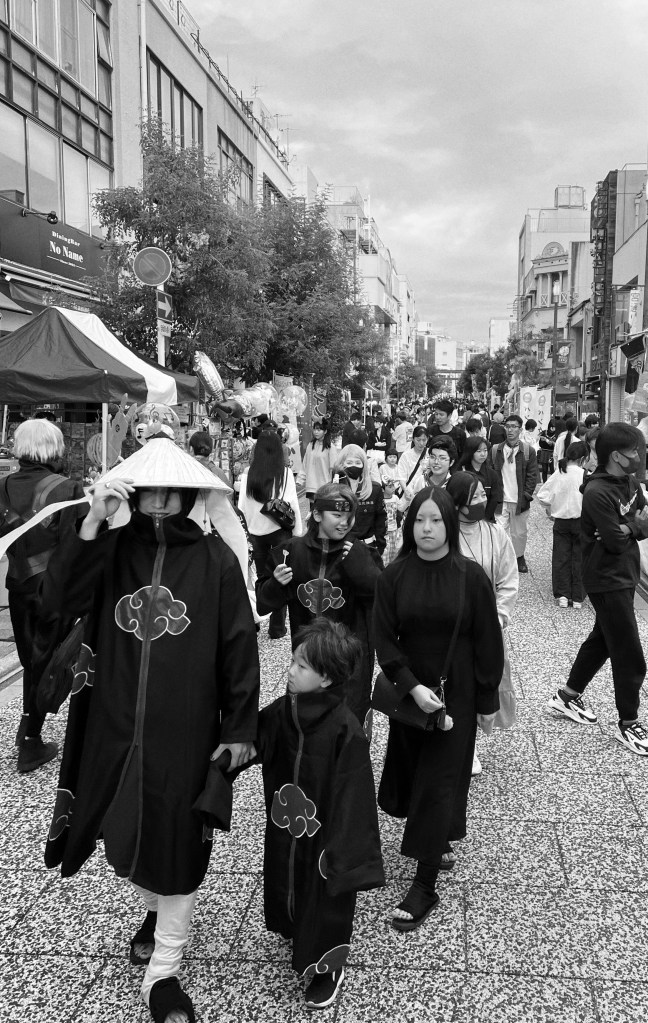
Cosplay on the Weekend

I stumbled upon this anime/cosplay festival when meeting an old friend I hadn’t seen in almost two decades.
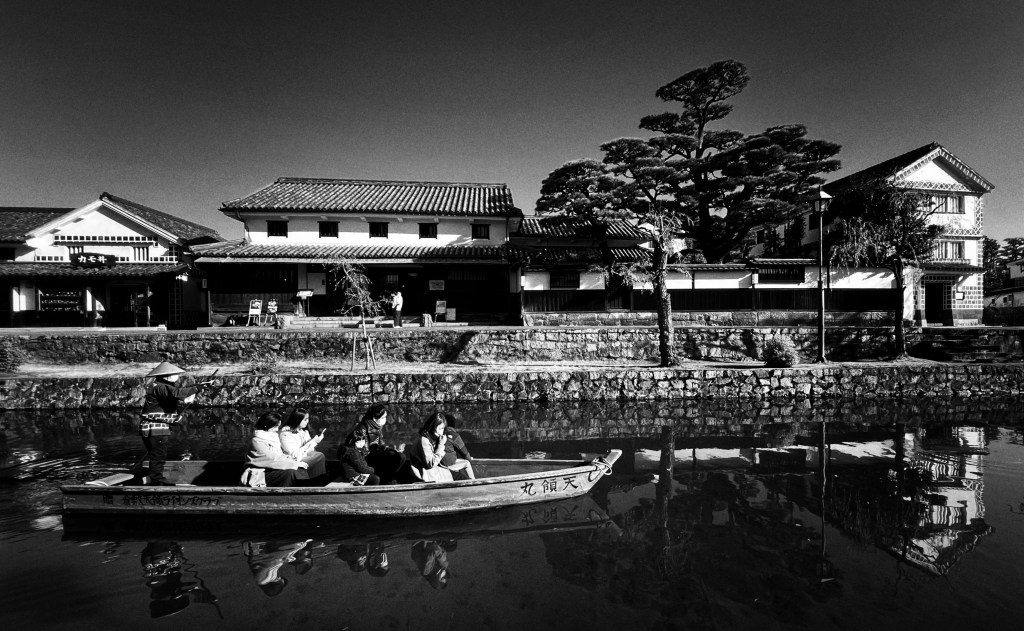
Kurashiki, Japan