It’s not money that grows on trees anymore

Children draw conclusions from what they can see.

I remember asking myself I was young where did ham come from, and not being able to give an answer. Processed food look so far removed from what they are made from that it is impossible to deduce what it is simply by looking at it.

So I am not surprized to read that Australian children (I grew up there) think cotton sock are from animals and yogurt come from plants. The logic could be mixing up cotton (from plants) for wool (from animals). Perhaps the logic for yogurt too is that it is from plants because the flavours are mostly fruit (strawberry, mango, apple, etc) or plants (aloe, which is a popular flavour in Australia).

Television, in a way, is a good window for information. The other source of information for me back then is books and public libraries. At least ithese were for me when I was a child in an age without the internet. Today’s children have no excuse for ignorance and laziness. The democracization of knowledge is one of the great achievements of our time now.
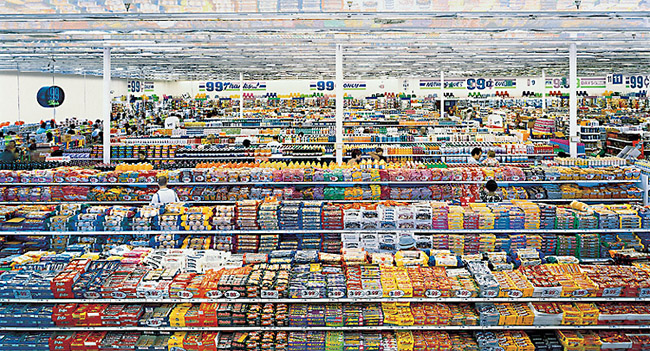
But the ease of obtaining knowledge in this age of information superhighway is also perhaps a loss of the ability to find out things for oneself in a genuine form of discovery and intimate understanding. Today’s children perhaps therefore rely on packaged information as much as packaged food that is, what I call, our supermarket culture.

But I think it is not only children who have trouble drawing logical conclusions about the world but also adults. Our world is complex. In this day and age learning to filter out the noise from the music is by no means easy. Nonetheless we must learn to filter it.
An oldie but a goodie – The Severn Suzuki UN Earth Summit speech

This speech is still a classic. It is by the environmentalist Severn Suzuki. In 1992 when she gave this speech she was twelve years old. Environmentalism runs in her family. Her father is David Suzuki but that should not taken away from her sincere and powerful message. What she said can be plainly seen by all with their own eyes, and heard with their own ears. Her father brought her up to see and hear these things.

And it is a message still relevant today, if not more.

Three books environmentally aware parents should read with their children

The movie based on Dr Seuss’s The Lorax is coming out soon.

It’s a shame we are moving towards a world which spends more time “watching” books than reading them.

Here are a few more titles which I like a lot – Farewell to Shady Glade and The Little House. Both stories are tales of the encroaching human world upon the nature we depend upon for survival. But sadly both books seems to be saying the only solution is to find another place to live, far from humans. What happens when the world becomes too crowded (like it is now) and we have no more places to run to, to take refuge in?

Our patch

The patch in winter I’d quite bare but it is still amazing that this much grows this time of the year.

(First shots from iPhone and trying direct upload.)

Art and the environment – Emma Lindsay

Artist, Emma Lindsay, is driven to speak up for the environment and our highlight our impact upon it. Watch this space for updates on this very talented artist … who happens to be a good friend.

The world economy only works if there are IMFs

Hasn’t anyone figured out that the world’s economies only ever seem to work with bailouts. Something is very wrong here.

The link between the environment and war

Did you know that 40% of world’s civil or internal wars in the last half century have been fought over for natural resources?

Today is International Day for Preventing the Exploitation of the Environment in War and Armed Conflict. We should remember the (illogical) reasons why we are fighting in the first place. Then, may be, we will put down our weapons and make peace instead.

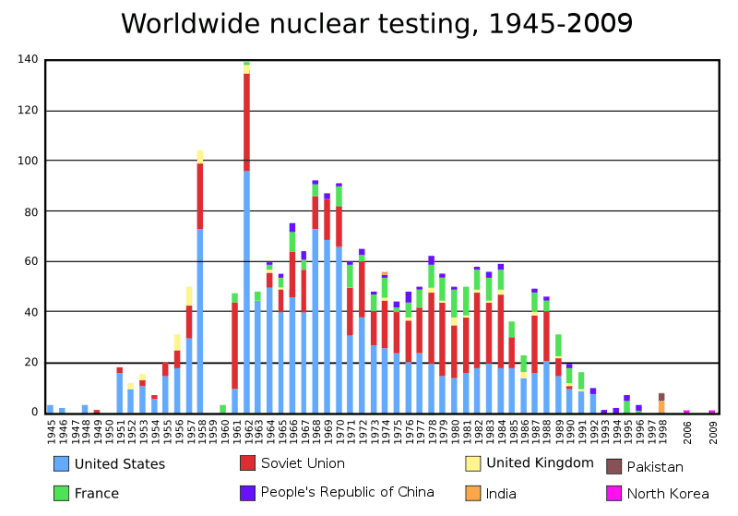
Just how many nuclear tests have we done?

Here is a art video representation of nuclear tests 1945-1998 by Japanese artist Isao Hashimoto created in 2003.

And to get up to date a graph from wikipedia showing the frequency of nuclear tests.

6,999,999,998 … 6,999,999,999 … 7 billion people … 7,000,000,001 …

Apparently we are counting down (up?) to person-number-seven-billion expected to be born on 31 October.

Our population has increased at a phenomenal rate. We reached:

3 billion in 1960,

4 billion in 1974,

5 billion in 1987, and

6 billion in 1999.

And now – 2011 – we shall reach 7 billion.

Just how many people can this little planet of ours support? As John Feeney succinctly put it growth is madness. Why we should countdown as if it is a celebration is beyond me. And if the above pattern is anything to go by we should reach 8 billion by 2022.

Will we be counting down then again? Will we be thinking this is a momentous occasion?