This vlogger had a good point. There is no such thing as a portrait lens, only portrait photos. Similarly there are no landscape lenses, just landscape photos.
Tag: photography
My photography kit
Over the last few months I have thought about what I really needed, and more importantly what I do not need. Which is why I went on a selling spree. I sold three lenses and a camera body today. Two manual focus 35mm, and 50mm lenses, a wide focal length 16-35mm auto focus lens, and manual SLR camera body from the 1970s. The manual lenses were too cumbersome to use plus had some mold issues (so I didn’t want it anywhere near my gear. The wide angle lens just never got me any shots that I liked. And the SLR was full manual with no metering.
Essentially, I figured out what I used a lot, which were my 24mm f1.4, 24-70mm f2.8, and 70-200mm f2.8. These got me all covered all ranges I need.
The 24mm was a little too wide for street photography so I played around with setting my full frame body to crop sensor mode. This gave me a 36mm f2.1 equivalent which is, in my opinion, the best focal length for street photography. The other benefit (or downside, depending on how you look at it) was that the images were now 10MP only. For SNS like instagram and the like this is fine. To print out also it is supposed to be enough for A4 prints. Furthermore, I can work with the RAW files in my iPhone apps.
So I traded all this gear to buy an APS-C DSLR. This had meant I can get the 24MP images on my 24mm f1.4 now (my street photography setup) and get an extra 100mm of focal length on my 70-200mm zoom, all without losing image quality.
All three lenses work with both bodies so I have a 24–300mm coverage in focal lengths. And with the 2x teleconverter I have 600mm reach in bright scenes as well, all this with just two bodies and three lenses.
Portraiture lens
On a 35mm film or sensor camera 35-70mm focal length is most natural.
My Dahlia

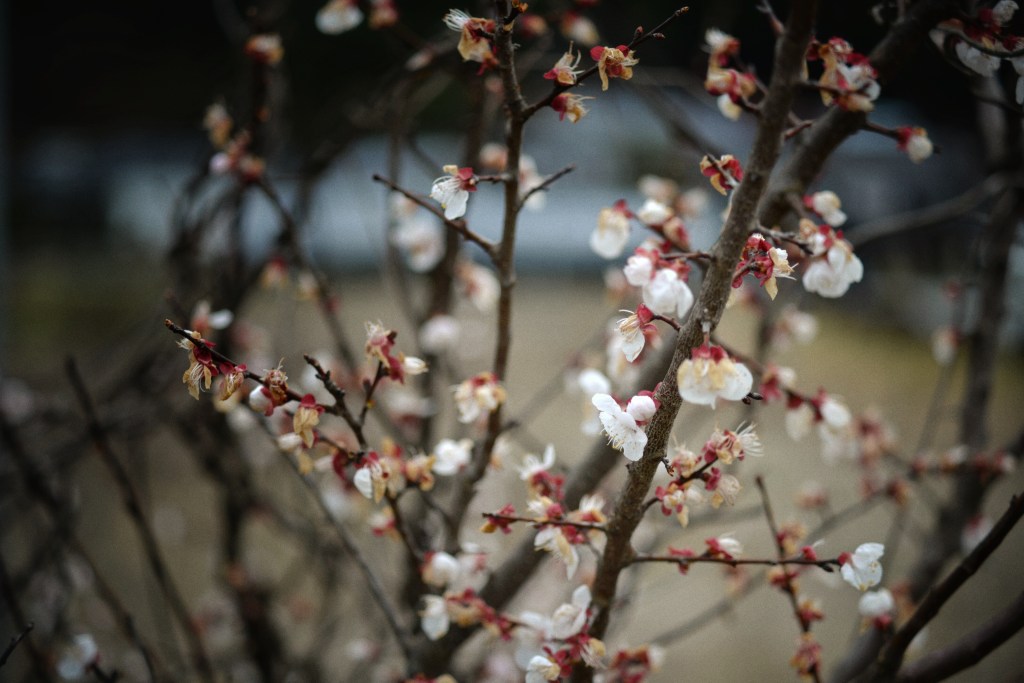
Plum Blossoms
Sacred dance, festival

Proceed with caution
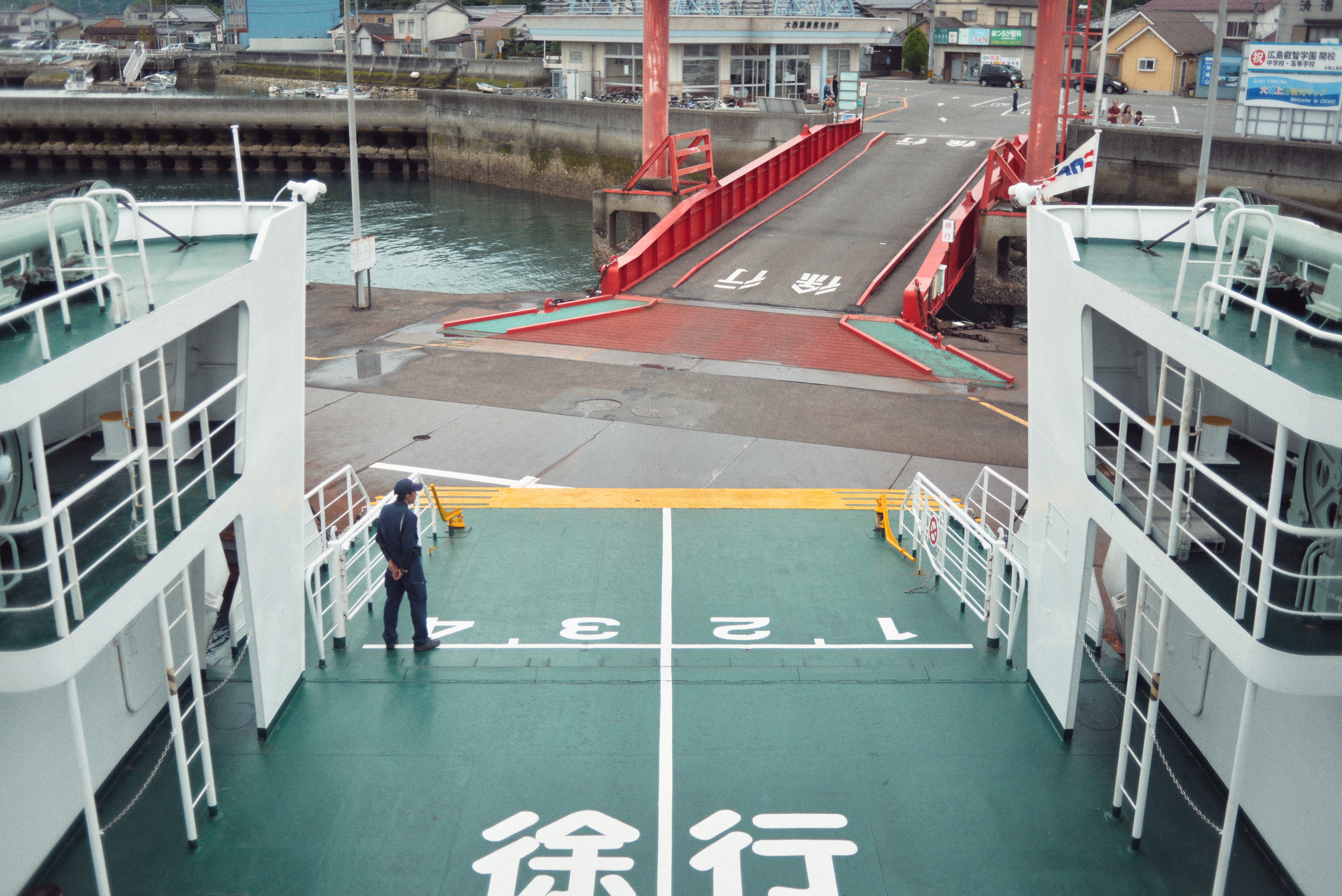
The search

Doing things for humanity; now doing things for the planet – Sebastian Salgado
I love photography. I love photography for its power to contain what we feel in the stillness of a single moment. I particularly like black and white photography. I like it because by removing colour the photographer forces the viewer to focus on the details, on what is happening in the scene, on the content of the photograph. And no one does this better than one of my favourite photographers, Sebastian Salgado.
Salgado began as a social documentary photographer focusing on the people and societies, particularly that of the poor across the globe. But according to the following video he had seen too much violence, too much bloodshed, that so affected him that he literally became sick, mentally and physically.
At the advice of his doctor he had to stop putting himself through such torture. As a viewer we can close the books and stop viewing the photographs that he captures. We only have the moments of silence that he shows us, ones which we control as viewers. But for Salgado the tragedy is a streaming memory that does not stop with the shutter. It was for this reason that he gave up photography and returned to his hometown, to his family in Brazil.
The back story is that he grew up on a farm with his seven sisters that once was covered by 50 percent of rainforest. There they had abundant food needing only to go once a year on a 60-day round-trip journey to sell their cattle. But when he returned after his long absence as a globe trotting photographer what he had found was that almost all the rainforest had been destroyed, that the land had been left bare. This caused the rainwater to run off the land much quicker than is needed leading to desertification of the land (his analogy was that of his bald head which dries in seconds). And it was with this discovery back home that he began to work to reforest his land he had now inherited.
Salgado after this period in his life he had taken up his camera again and shifted his lens towards nature and animals. His message hasn’t change because he is still concerned about how we can arrive as a species. Only now he is doing this from the point of view of how we need to live in harmony with land and nature.
Salt of the Earth (page in Japanese) is showing in Hiroshima right now.
Turning the prayer wheel

(Photographer Unknown)
 signature103