What Adam Phillips, a psychotherapist and writer, says in this interview is, in my opinion, excellent and very close to Buddhist thinking.
Author: Warren Tang
I write about linguistics and philosophy. I also write poetry and take photographs.
How much or little know about glaciers
Did you know only ten glaciers among 54,000 in the Himalayas have been studied in any great detail. Just how little do we know.
Global warming brings about extreme weather and climate. Should expect this to be any different for mountain terrain and glacial ice?
A message from David Suzuki of the David Suzuki Foundation
Dear friends,
Some of you may have seen media coverage about my decision to step off the board of directors of the David Suzuki Foundation. I am writing to tell you more about this and what it means.
After my children and grandchildren, my greatest pride is the David Suzuki Foundation.
I am fiercely proud of how the Foundation brings science and solutions to environment problems. I’m determined to ensure that the Foundation continues to have the ability to solve critical environmental issues and bring hope for the future.
But I have reached a point in my life where I would like to consider myself an elder. I want to speak freely without fear that my words will be deemed too political, and harm the organization of which I am so proud. I am keenly aware that some governments, industries and special interest groups are working hard to silence us. They use threats to the Foundation’s charitable status in attempts to mute its powerful voice on issues that matter deeply to you and many other Canadians.
This bullying demonstrates how important it is to speak out.
The Foundation’s science-based, solutions-oriented research and educational work has enriched our democracy and reflected Canadian values for two decades. While not always happily received by governments or industrial interests, this work is strictly non-partisan, as required by the laws governing charities, and has made the Foundation one of the most trusted environmental voices in Canada.
Our opponents, however, are redoubling their efforts to marginalize the Foundation by getting at me, personally.
So last year, I made the decision to step off the board of directors of the David Suzuki Foundation. I remain one of its most active volunteers and committed major donors. This way I can fulfill my personal mission and the Foundation can continue to build on its inspiring work—for us and our grandchildren—in finding solutions to our shared, and very real, environmental challenges.
I hope you understand this decision and will continue to show your, steadfast support for my work in this concrete way:
Please share this letter with your family and friends and, at this critical moment, invite them to become supporters of the David Suzuki Foundation, by joining our online community or donating today.
Sincerely,
David Suzuki
This life is limitless
This is a Dharma talk by my master, Harada Tangen Roshi. It is on the phrase “kono inochi kagiri nashi” which means roughly “this life is limitless”. Roshi sama (a title meaning ‘venerable teacher’) has used this phrase “this life” in many of not all his Dharma talks. Everything should focused upon this life we are living and none other. It doesn’t mean ‘think of what our goal is – enlightenment’, but often he means it to be this very moment and none other. For if one is living in the past or future one is not doing one’s utmost. This lies the essence of the Buddha’s Teaching.
Apple financially bigger than Poland?
Numbers are deceptive, especially catchy headlines quoting stupid statistics.
Apple is apparently worth more than the nation of Poland. Well, not quite. Apple is worth 500 billion making this more than Poland’s GDP.
So there you have it. Measuring market worth against a country’s GDP … um, no comment.
It doesn’t take a math genius to figure out that Apple, a company with 60,400 workers cannot be equated to Poland, a nation of over 38 million people. If somehow the numbers make sense then Apple must churning so many iPhones, iPads and iWhatevers that there must one for every person in Poland or the planet. But clearly this is not the case.
No, don’t listen to stupid numbers. Count what is important. Count the starving people. Count the number of deaths from war. Count the growing population in developing nations and the declining population in the developed (‘developed’ as compared to what?) nations.
If you count everything in monetary terms you will only see what’s in it for you and not who is dying for your selfishness.
The thing about inconveniences …
… is that it ultimately gives one a better perspective of the world.
Last night I posted on my Facebook Wall about the beauty of the stars in a clear sky. And this morning I continued the story with an update about how clear the morning night sky was again. This prompted a friend of mine to comment how she wished she had the luxury of looking at the stars like me.
But what she and probably everyone else don’t realize was that I wasn’t actually delibrately going outside to look at the night sky but rather I was doing the mundane task of putting in the laundry into the washing machine in our creaky old country outhouse. I do it every night before I sleep at nine (put on a six-hour-later timer so that we use the off peak electricity, of course), collect and hang it up just after five in the morning. So all I had done was look up at the night sky as I made the trip there and back.
It isn’t the romantic country lifestyle as everyone seems to think. That is what is so great about darkness. They are like “alcohol goggles” (that is, being drunk): you can forget about reality and enjoy the sheer beauty of the dark clear night sky. But it all comes crashing back to earth when you enter your artificially lit home and see yourself in your run down PJs in the mirror.
As I said it isn’t a romantic lifestyle but it is an ideal one, one that makes me happy and feel closer to nature. And I wouldn’t give it up for the world. At least that is what I feel at the moment. Because if it wasn’t for this lack of convenience of not having space for a washine machine in our house I wouldn’t have seen that beautiful sky, or notice the natural rhythm – night after night – of the world that is beyond the psychological and physical walls which surround me.
Vietnam uses monks to take territory
This is why I hate politics.
Vietnam has decided to send monks to the Spratly Islands to lay claim to the Islands as their territory. But why not just send civilians? And I don’t think much of monks who would agree to go over probably knowing full well why their task is. It isn’t Buddhism and Buddhism has nothing to do with this.
It is a human shield in not so much as a disguise. Atrocious.
It’s not money that grows on trees anymore
Children draw conclusions from what they can see.
I remember asking myself I was young where did ham come from, and not being able to give an answer. Processed food look so far removed from what they are made from that it is impossible to deduce what it is simply by looking at it.
So I am not surprized to read that Australian children (I grew up there) think cotton sock are from animals and yogurt come from plants. The logic could be mixing up cotton (from plants) for wool (from animals). Perhaps the logic for yogurt too is that it is from plants because the flavours are mostly fruit (strawberry, mango, apple, etc) or plants (aloe, which is a popular flavour in Australia).
Television, in a way, is a good window for information. The other source of information for me back then is books and public libraries. At least ithese were for me when I was a child in an age without the internet. Today’s children have no excuse for ignorance and laziness. The democracization of knowledge is one of the great achievements of our time now.
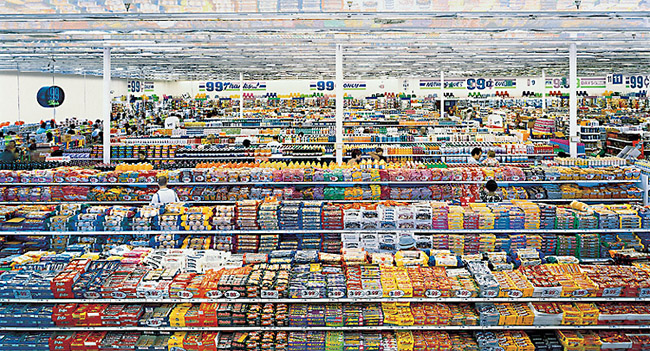 But the ease of obtaining knowledge in this age of information superhighway is also perhaps a loss of the ability to find out things for oneself in a genuine form of discovery and intimate understanding. Today’s children perhaps therefore rely on packaged information as much as packaged food that is, what I call, our supermarket culture.
But I think it is not only children who have trouble drawing logical conclusions about the world but also adults. Our world is complex. In this day and age learning to filter out the noise from the music is by no means easy. Nonetheless we must learn to filter it.
An oldie but a goodie – The Severn Suzuki UN Earth Summit speech
This speech is still a classic. It is by the environmentalist Severn Suzuki. In 1992 when she gave this speech she was twelve years old. Environmentalism runs in her family. Her father is David Suzuki but that should not taken away from her sincere and powerful message. What she said can be plainly seen by all with their own eyes, and heard with their own ears. Her father brought her up to see and hear these things.
And it is a message still relevant today, if not more.
Three books environmentally aware parents should read with their children
The movie based on Dr Seuss’s The Lorax is coming out soon.
It’s a shame we are moving towards a world which spends more time “watching” books than reading them.
Here are a few more titles which I like a lot – Farewell to Shady Glade and The Little House. Both stories are tales of the encroaching human world upon the nature we depend upon for survival. But sadly both books seems to be saying the only solution is to find another place to live, far from humans. What happens when the world becomes too crowded (like it is now) and we have no more places to run to, to take refuge in?
 signature103