The probability of you having a higher income, education and lifestyle is greater if you live in an English speaking country.
That can be shown by economic statistics. The chances of you being in the lower income, education and lifestyle brackets are much lower if you live in these countries.
But whether it is the English that you speak that allows this is a problematic question. One can argue that the dominance of English as a world language has contributed to this and I will agree with that argument.
Francois Lyotard called these grand-narratives where a dominant discourse shuts out other arguments. The best example is Communism. But also English as a world language and the promotion of that ideal is also a subtle and hidden shutout of all other arguments as well.
I will say this though: English is only guilty because of its position as a world language. If it were another language, say, French (which had also vied for the same status as late as the late 20th century) the same grand-narrative posturing would occur.
There can be no neutral world language. If there were someone somewhere would eventually find a way to use it to their advantage.
Author: Warren Tang
I write about linguistics and philosophy. I also write poetry and take photographs.
Money as medium of exchange
One of the roles of money is to be a medium of exchange. This is usually explained in contrast to the barter system. Bartering is to exchange one type of good for another without the use of money. The problem usually pointed out is that a unit of one good is not equivalent to another unit of good. Clearly, trading a cow for a dog is not the same thing. And you may not want ten dogs for the one cow. Continue reading “Money as medium of exchange”
How to slow down the destruction of the planet
Today is the nine anniversary of Sustainability Dharma and me blogging. This post is in part a celebration of this event. I am not sure how many original followers I have left but thank you for reading. Let’s hope we can save our demise.
You have heard it before that we are comsuming more than the earth is renewing the resources. Industrialization is one reason for this. The efficiency with which a small number of individuals can produce a large amount of products is staggering. Think logging. Cutting down a tree took a lot more effort than it did a hundred ago. So when we say economical we don’t just mean efficiency by the end-user but also the producer. Now multply that by the staggering population we have now and you will understand nothing in this world is going to slow consumption except reduction per person and a reduction of the population.
Continue reading “How to slow down the destruction of the planet”
Thay hospitalised
Prayers for Thay who has been hospitalised from a brain haemorrhage in recent days. This is a reminder that no one free from suffering least of all this writer.
“Haruki Murakami says Japan ignoring WWII, Fukushima role”
TOKYO (AFP) – Japanese writer Haruki Murakami has chided his country for shirking responsibility for its World War II aggression and the Fukushima nuclear disaster in an interview published Monday.
Speaking to the Mainichi Shimbun newspaper, the 65-year-old author said: “No one has taken real responsibility for the 1945 war end or the 2011 Fukushima Daiichi nuclear accident. I feel so.” “After the war, it was eventually concluded that no one was wrong,” said Murakami of the pervasive attitude in Japan.
Japanese people have come to consider themselves as “victims” of the war, he added.
Murakami, one of Japan’s best known writers who has repeatedly been tipped as a future Nobel Literature laureate, said that it was natural for China and the Koreas to continue to feel resentment towards Japan for its wartime aggressions.
“Fundamentally, Japanese people tend not to have an idea that they were also assailants, and the tendency is getting clearer,” he said.
Japan’s lack of repentance over its behaviour in the first half of the 20th century continues to strain relations with regional neighbours.
Murakami also said Japan did not seriously pursue who was really responsible for the 2011 crisis at Fukushima – when powerful earthquake and tsunami caused a reactor meltdown and radiation leaks – choosing instead to blame the disaster on uncontrollable natural events.
“I’m afraid that it can be understood that the earthquake and tsunami were the biggest assailants and the rest of us were all victims. That’s my biggest concern.” Murakami’s latest novel “Colorless Tsukuru Tazaki and His Years of Pilgrimage” was released in Europe and the United States this summer.
He lost out on this year’s Nobel to Patrick Modiano, a historical novelist who writes about France’s painful experience of Nazi occupation.
Originally from Straits Times.
A Battery With A Twenty Year Lifespan …
It is all very well to produce a battery that will last 20 years. But is not that useless if your equipment lasts only three, maybe four years maximum? It is like having a heart built to last five-hundred when the rest of your body breaks down in 100.
Congratulations to Malala Yousafzai and Kailash Satyarthi
It is a shame that the Japanese people did not get the Peace Prize for Article 9 of the Constitution. But having said that Malala Yousafzai and Kailash Satyarthi are far more deserving of the Award since they have inspired and at the same time done a lot more for the world. If the Japanese want a Peace Prize they would need to do a lot more than just make a petition.
Things to be done
There are things to be done and things to avoid. Don’t waste even a moment for life is too short.
Today’s Buddha
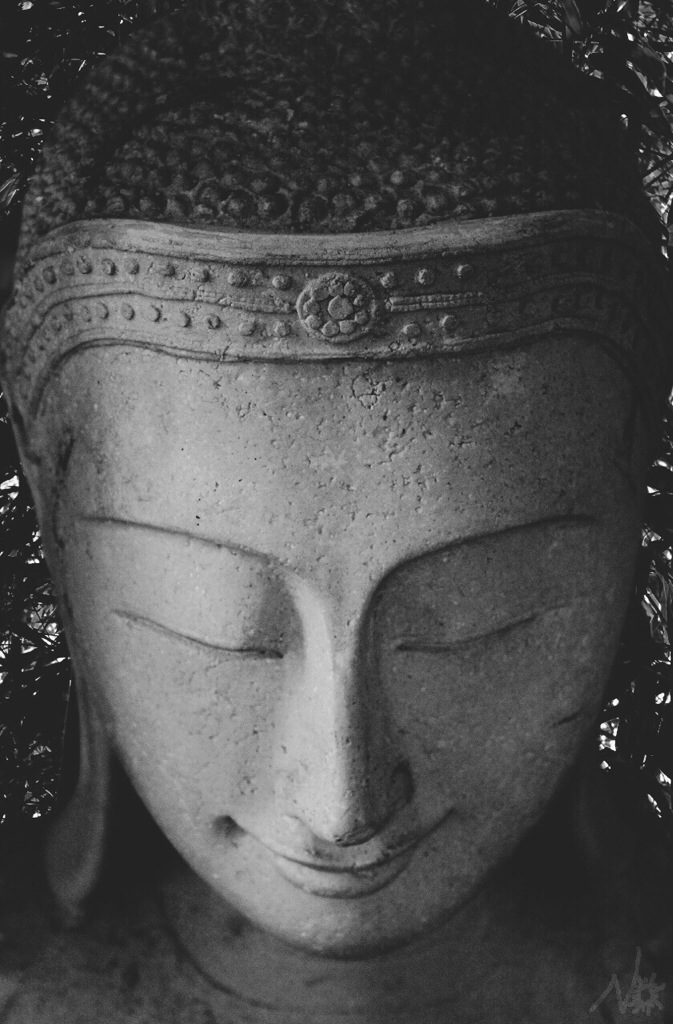
Non-attachment
Kitano Gempo, abbot of Eihei temple, was ninety-two years old when he passed away in the year 1933. He endeavored his whole life not to be attached to anything. As a wandering mendicant when he was twenty he happened to meet a traveler who smoked tobacco. As they walked together down a mountain road, they stopped under a tree to rest. The traveler offered Kitano a smoke, which he accepted, as he was very hungry at the time.
 signature103